- Recipes
-
-
FEATURED RECIPE
-
TRENDING RECIPES
-
-
-



Korean Banchan Recipes You Won’t Forget

Want to save this recipe?
I got you! Just enter your email address, and I'll forward it to your inbox! Plus, you'll receive a bonus of healthful, "must-try" recipes each week!
Nutrition per serving
Korean-inspired meals have been popularized recently for their notoriously bold and versatile flavors, diverse array of ingredient choices, and well-rounded nutritional value. Meals in Korean cuisine highlight multiple dishes with a variety of textures, colors, and tastes for every course. This unique culinary choice of Korean food stems from the cultural emphasis on ‘balance’ and ‘harmony’.
By incorporating different types of ingredients like fermented foods, bone broths, fresh produce, and proteins, Korean meals offer a delicious and filling eating experience. One of the easiest ways to include a wide variety of ingredients and flavor profiles is to introduce tempting side dishes. Some of the best Korean side dishes are simple and quick to prepare, yet pack a powerful punch of flavor.
What is Banchan?
In Korean, side dishes or small plates are referred to as Banchan. So, what is Banchan? As a category of dishes, Banchan are typically served with a protein and rice. These plates of food are often made in a bulk batch to feed a whole table of people. Banchan should be served in a large dish and set in the center of the table for people to take individual portions.
While appreciated for their simplicity, Banchan dishes are known to balance a meal with juxtaposing flavors. Fermented, spicy, or sweet dishes are popular options for side dishes because these choices can balance a savory protein.
These recipes can be staples or seasonal: some Banchan dishes are served throughout the year while others are coveted around specific times of year when certain ingredients are in season. Depending on the main dish, they can be served hot or cold, providing the desired variety to craft a harmonious meal.
Are Korean Side Dishes Healthy?
Yes! Korean side dishes are considered to be especially healthy because of the focus on fresh ingredients and balanced portions. By incorporating all different flavor profiles and textures, there is enough opportunity to build a nutritionally dense meal.
During a typical Korean meal, the table may see an average of 3-5 Banchan to complement different dishes and provide versatility between bites. Because these side dishes commonly incorporate fermented ingredients, vegetables, spices, and protein, they can fill potential holes in a meal plan and create a more well-rounded diet.
How Many Banchan Recipes Are There?
Countless. There are an endless amount of Korean Banchan recipes out there because of the focus on fresh and easily accessible ingredients. You can customize or adjust recipes depending on what you have in the house or what you’re craving that day. However, there are a few categories of Banchan recipes to consider, including:
- Fermented and pickled foods: Banchan which includes fermented or pickled ingredients is perfect to balance rich proteins with the crisp, punchy, and sour flavor. These foods are not only perfect to lighten heavy meals, but also to take care of digestive health. The gut-friendly bacteria can promote wellness in the digestive system and boost immunity.
- Soups and broths: Traditionally, soups and broths are a staple of Banchan dishes. Today, having a broth with every meal is less common, but on occasion, a side portion of soup can elevate a meal’s flavors by being a warm and comforting break from stronger flavors.
- Vegetable-based Banchan: As the seasonal vegetables change, so will the ingredients in a vegetable-based Banchan dish. Typically, you’ll season your veggies with sesame oil, garlic, and soy sauce, and serve hot or cold. These dishes are supposed to freshen up a meal that is heavy with proteins and carbs.
- Protein Banchan: Some meals highlight a lighter star of the show that isn’t a savory protein or dense carb. When the base of the meal is simple, add complexity and substance with protein-based Banchan. For example, if the main dish is a stew or broth, adding a side of cooked protein can elevate the experience.
- Pancakes and fritters: Korean pancakes can be sweet or savory, with many Banchan variations being prepared from ingredients like seasonal vegetables or fish. Whether you like fluffy pancakes or crunchy fritters, this choice can be a bright and fun selection to make an impression on the center of the table.
How Long Can Korean Side Dish Recipes Last?
Small Korean side dishes, or Banchan, are typically prepared in large batches to serve a whole table of people or to be used later as weekly meal prep. By having fresh side dishes ready ahead of time, putting together a well-rounded meal is a quicker and more manageable task.
As a category, there is no universal timetable of how long to store Banchan. However, you can follow these general rules of thumb:
- Fermented or pickled foods: last 6 months in the fridge
- Sauteed vegetables or stir-frys: will stay fresh for a few days (approx: 3-5) in the fridge
- Boiled or blanched dishes: can be stored up to 3 days in the fridge
- Stews: last in the fridge for around 3-4 days
- Grilled or fried dishes: should only be refrigerated for up to 2-3 days
Best Korean Side Dishes Recipes
Classic Kimchi (Napa Cabbage)

Kimchi is a staple Banchan dish for Korean meals. The fresh ingredients, bold flavors, and fermentation process make it a popular option for cleansing the palate between bites. To make kimchi, prepare your napa cabbage and other vegetables by chopping them into bite-sized pieces and salting the cabbage for a few hours to draw out excess moisture. To season the vegetables, you’ll need gochugaru (a Korean chili flake), plenty of garlic, kosher salt, onion, and ginger. Once combined, this mixture should ferment for a few days before being stored in the fridge.
Cucumber Salad (Oi Muchim)

This dish is a light and easy Korean side dish to prepare quickly before a meal is served. Crunchy, fresh cucumbers make a versatile side. Typically, cucumber salad is served spicy or savory with seasonings like gochugaru, sugar, vinegar, and soy sauce. Start by chopping up a cucumber into even slices, and then season before refrigerating. As they marinate, the flavors will intensify to make a more flavorful cucumber Banchan dish.
Seasoned Bean Sprouts (Sukju Namul)

While soy bean sprouts are more common across Americanized Asian dishes, this Banchan plate highlights a lesser-appreciated sprout: the mung bean sprout. Seasoned sprouts don’t need to be too complex, and this bean sprout Banchan is elevated by simple flavors like scallion, garlic, sesame oil, and pepper. Mung bean sprouts grow all year round, so Sukju Namul is popular throughout the seasons.
Spicy Radish Salad (Mu Saengchae)

You may be catching on to the pattern: most Banchan dishes consist of minimal ingredients elevated by a strategic seasoning mix. For spicy radish salad, the produce may be the star of the show, but the flavors are heightened by onion, garlic, Korean red chili pepper, sugar, salt, ginger, and sesame. You should serve this dish cold after the seasoning marinates in the refrigerator.
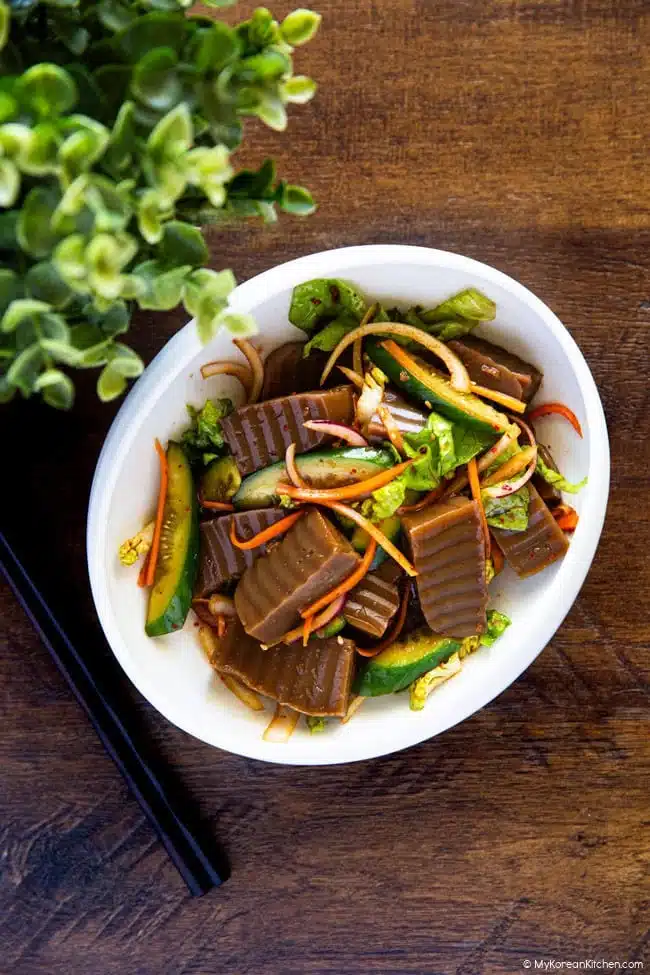
This dish is made from acorn starch, water, salt, and sesame oil. By itself, the dish has a mild and nutty flavor that is easily overpowered by other plates on the table, but it is commonly elevated with soy sauce, gochugaru, and green onions to create a dish called Dotorimuk Muchim. This palette cleanser brightly pairs with savory and umami dishes.
Beef and Quail Eggs (Jangjorim)

Soy braised beef with quail eggs is a popular Banchan dish for even the pickiest of eaters. In fact, this side plate is commonly served in schools and work cafeterias as a safe option. As with most Banchan, this dish focuses on a select few ingredients and elevates them with spices. To empower the natural flavors of the beef and quail eggs, this dish is seasoned with vinegar, bay leaves, ginger, garlic, and onion. The dish is usually served at room temperature, but it can be eaten hot or cold.

Kelp noodles are a refreshing side dish that comes from the jelly extracted from seaweed — kelp. They are mild in flavor and have a distinguishable crunchy texture that is fun for the palette during rich and meaty courses. Because there is no potent flavor, you can customize the exact taste by tweaking your seasoning profile. For kelp noodle salad, you’ll need ingredients like imitation crab meat, mayonnaise, and cucumber to get the perfect creamy and crunchy combination.
Braised Potatoes (Gamja Jorim)

Potatoes are the base for a filling Korean side dish. Because they soak up flavor, you can marinate potatoes with plenty of different complex flavors to make a cravable but easy Banchan. Like many Korean side dish recipes, this one calls for a sweet and savory sauce to compliment a main course. The thick sauce is made of soy sauce, sugar, corn syrup, rice wine, and garlic. Enjoy these braised potatoes hot!
Tuna Pancakes (Chamchijeon)

Fried foods are warming for the heart and soul. Tuna pancakes are a comforting dish that seem complex but can be prepared with just a few simple ingredients. Start by combining your tuna with onions, carrots, garlic, eggs, cheese, and flour, season to taste, then fry! How’s that for a spin on a Korean fish cake side dish?
Korean Spicy Tofu (Dubu Jorim)

Tofu is a popular meat substitute, but in Asian cuisine, it is often used as the star of recipes for its unique texture and customizable flavor. You can eat tofu alongside meat, vegetables, or carbs. Tofu is high in protein and vitamins like calcium, iron, zinc, and magnesium. Spicy tofu highlights the fun, creamy texture of tofu while elevating the flavor with spices and savory ingredients like gochugaru and scallions.
Green Onion Salad (Pa Muchim)

Scallions are usually an ingredient added to dishes for brightness or a punchy onion kick. It isn’t so common for green onions to take the spotlight as the main ingredient in the dish, so that’s what makes Pa Muchim so special. Green onions, or Pa in Korean, have a uniquely versatile onion flavor that is easy to dress up in its raw form. For this salad, you’ll shred green onions and toss with sesame, gochugaru, soy sauce, vinegar, and sugar.
Ox Bone Soup (Seolleongtang)

Simplicity is often the key to a perfect soup. A warm and savory bone broth can be the perfect umami craving for a cold day. Thankfully, a Seolleongtang recipe should also be quick and easy to make. The most grueling part of the cooking process is boiling the scum off of them before refiring for another boil. All in all, Seolleongtang only takes a couple ingredients like marrow, brisket, and seasoning to taste. A perfect recipe for winter!
Rice Cake Soup (Tteokguk)

Traditionally eaten to bring good luck at Lunar New Year celebrations, Tteokguk is a savory rice cake soup with beef broth and toppings like cuts of meat and scallions. Rice cakes are soft, pillowy pieces of condensed rice that are typically eaten in soups or covered in a sweet and spicy sauce. Thankfully, the recipe is easy to make. Simply add the ingredients to a pot and wait for the flavors to mingle. While it is a traditional holiday recipe, you can enjoy it all year round!
Summary
I told you, there are an endless amount of delicious Banchan recipes out there. These are just some of the dishes that you can enjoy alongside a Korean-style meal, or add to your weekly meal prep rotation for fresh, nutrient-dense sides on demand.