
Creamy Hummus
Ingredients
-
water to cover the chickpeas
-
1 teaspoon of baking soda
 This helps to soften the chickpeas which speeds up the cooking and results in a creamier hummus
-
1lb dry chickpeas
 2 cans no salt added chickpeas
- 1 cup tahini (hulled)
- 1 tablespoon cumin
- 2 teaspoons smoked paprika
- 2 garlic cloves
- juice from 1/2 lemon
- pinch of sea salt
- 1 teaspoon fine (white) pepper
- 1/3 cup chickpea water (aquafaba)
- 1/4 cup aquafaba
- 2 tablespoons olive oil
- olive oil
- sumac, smoked paprika or parsley
Steps
Step 1
Add chickpeas to an airtight container and add more than enough water to cover them (about 3 inches) since they will expand.
Soak the dried chickpeas in water overnight. You can also soak them for about 12 hours, but I would leave them out of the fridge.
The next day, drain and rinse them.
Step 2
Note: If using canned chickpeas, you can skip this step. But reserve the liquid from the canned chickpeas – aquafaba.
Place the soaked chickpeas in a pot with fresh water and baking soda.
Bring to a boil, then reduce the heat and simmer for about 1 to 1.5 hours or until the chickpeas are tender. Reserve about 1 cup of the garbanzo bean water, also known as aquafaba.
Step 3
For a smoother texture, it is recommended that you peel the cooked garbanzo beans. You can rub them between your fingers to remove the skin.
I prefer to drain the cooked chickpeas and add them to a bowl with clean water. Agitate the chickpeas using your fingers until the skin easily comes off and floats to the top. And you do not have to peel ALL of the chickpeas but I recommend at least 70% of them.
Step 4
In a powerful food processor or high-speed blender, add all the “blend” ingredients and process.
As the chickpeas process, slowly drizzle in olive oil and then the 1/4 cup of aquafaba liquid. The stream should be thinner than the body of a pencil. Blend until smooth.
Note: you rarely get hummus texture or flavor exactly the way you want it, so you will need to adjust by seasoning to taste with cumin, sea salt, white pepper and citric acid (or fresh lemon juice). The only reason why you may want to use citric acid over lemon juice is if the hummus is already too watery.
If the hummus is too thick, gradually drizzle spoonfuls of aquafaba while blending until you reach your desired consistency. If it is too watery, drizzle in spoonfuls of olive oil or tahini.
Step 5
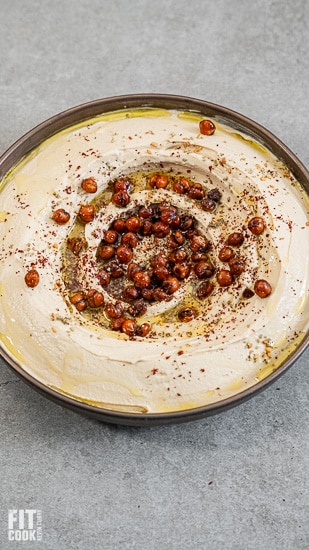
Transfer the hummus to a serving bowl. Place the back of a spoon in the middle of the plate, gently press down, and turn the plate clockwise to create a crevice that goes all the way around the bowl.
If desired, garnish with a drizzle of extra virgin olive oil and sprinkle with your favorite spice, such as smoked paprika, sumac, or chopped fresh parsley. Serve with warm pita bread or fresh vegetables like sweet bell peppers as scoops.
For a personal touch, I love to enjoy my hummus with spicy, crunchy chickpeas, a drizzle of olive oil, and a dash of sumac. It’s a combination that never fails!
Step 6
This recipe makes 15 – 16 servings so it is excellent for a party. If you do not plan to enjoy it all at once, store it in the freezer for up to 2 months or in the fridge for 7 – 10 days for meal prep.
Pro tip: Once stored, hummus can become somewhat dry in the fridge, even in airtight containers. To “rehydrate,” simply cover the top of the hummus with a small layer of ice-cold water and let it rest for 1 minute. Gently press the water into the hummus using a paper towel, and yes, the towel will absorb the water. Stir with a spoon or spatula, and it should be creamy again.